Scientific and Data-Intensive Computing at SLAC
SLAC and the Genesis Mission
SLAC is proud to support the Genesis Mission, a Department of Energy initiative launched November 24, 2025, to secure U.S. leadership in artificial intelligence.
View the Genesis Town Hall slides from March 6, 2026 (SLAC authentication required).

Integrating Scientific Computing at SLAC
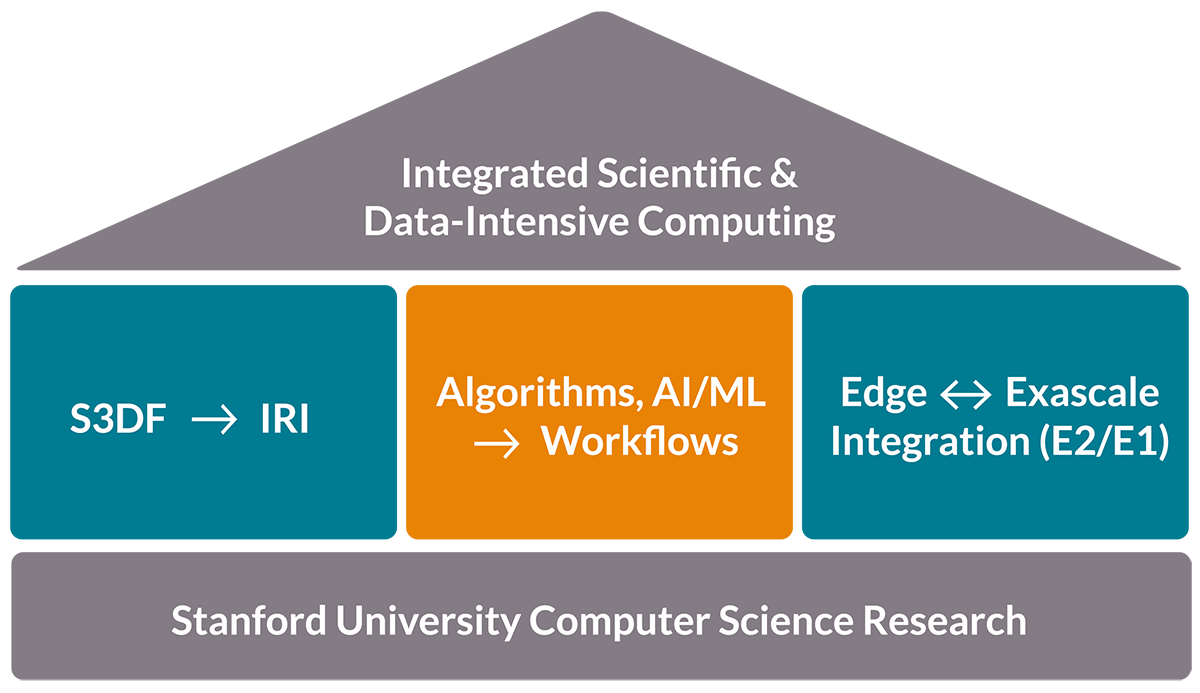
The Integrated Scientific and Data-intensive Computing Initiative (ISDCI) is built on three pillars:
- Infrastructure provided through the SLAC Shared Science Data Facility (S3DF) coupled with a platform that provides an interface to the Department Of Energy’s Integrated Research Infrastructure (IRI) program and Advanced Scientific Computing Research program (ASCR) resources.
- SLAC’s expertise in streaming data collection and processing at the edge and the ongoing efforts in enabling real-time or near-real-time analysis and,
- The work being done to incorporate AI and machine learning at an algorithmic level into the complex workflows we support.
The innovative computer science research SLAC does in collaboration with Stanford University supports the initiative. ISDCI will transform how SLAC delivers the DOE’s science mission.
Initiative Areas
Scientific breakthroughs rely on abundant, easily accessible and reliable compute and data services. The SLAC Shared Scientific Data Facility (S3DF) and its platform services allow seamless access to ASCR high performance computing resources.

SLAC's AI/ML enabled workflows allow researchers to analyze high-volume, high-speed data experiments to drive discoveries in biology, chemistry and physics. We also develop AI tools to improve complex accelerator systems used for research and other applications.
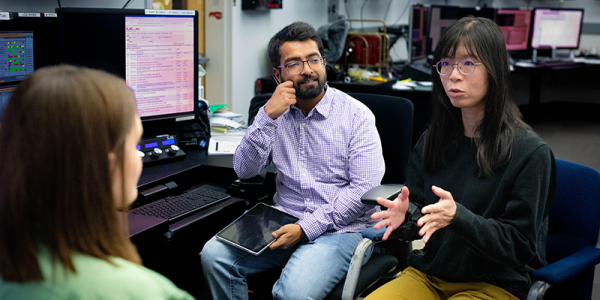
Leading streaming AI-based accelerated analysis through the whole of the computational ecosystem.
Real-time processing at or near an instrument can inform immediate decisions about data collection or enable self-driving experiments that can maximize the efficiency and quality of data collection.